



Specifications OMB934 1ML
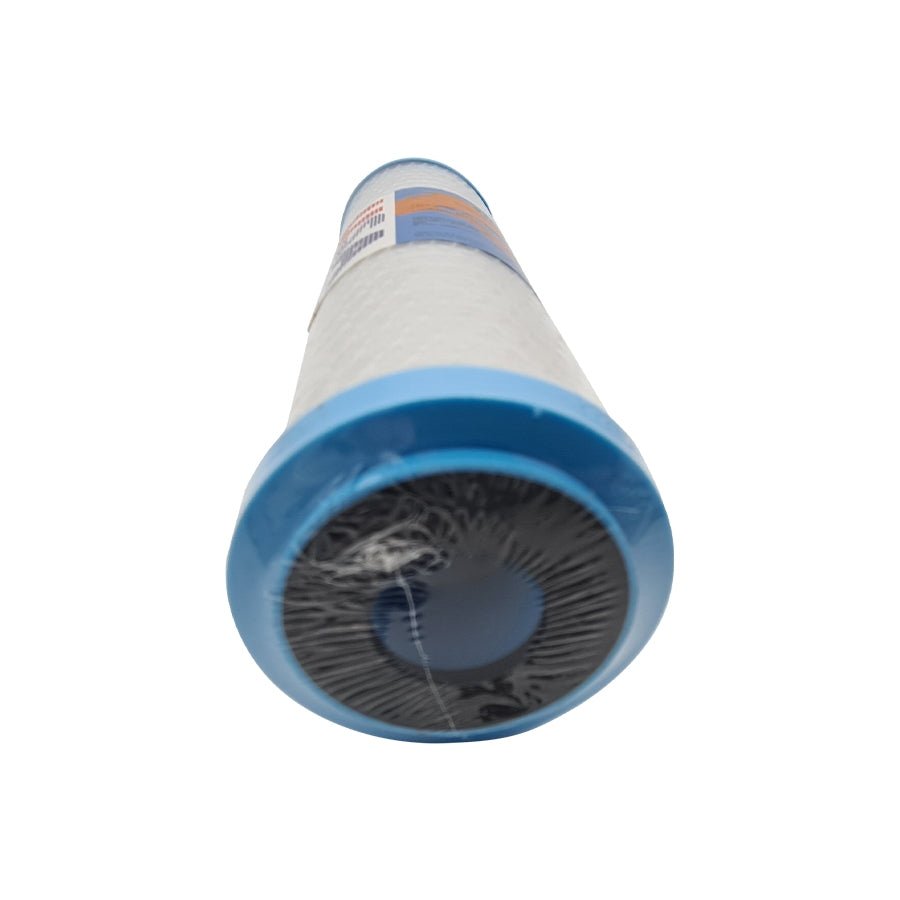
Omnipure OMB934 1 Micron Carbon Block Chloramine with Cyst and Heavy Metal Removal Water Filter Replacement Cartridge 10" x 2.5"
With the highest volume in the industry, the OC-Series filter elements are designed to fit most standard 4-7/8", 9-3/4" and 20" cartridge housings. Omnipure utilizes a spring loading device to compress the media, reducing media migration and ensuring that the water passes properly through the media for optimum filtration.
Omnipure Filter Company offers three series of replacement filter elements for use in systems or as stand-alone units - the OC-Series, the CS-Series and the OMB-Series.
The Ultra Slim Line, or CS-Series, filter element is engineered to fit any 9-3/4" housing including the narrower models now on the market. The Slim Line includes all of the engineering features available on the OC-Series in a small, slender profile.
The OMB-Series of replacement cartridges feature the new OmnipureBlock™ media. This high quality carbon block media is manufactured from raw materials to precise specifications entirely at the Omnipure manufacturing facility. Filter elements are available in 10 micron, 5 micron, 1 micron and 1 micron lead reduction formulations. Elements are finished with a single layer of spun-bonded polypropylene netting. Polypropylene end caps with compression gaskets are standard. Ask your Omnipure representative about custom formulations and alternative finishing options.
As far as water treatments go, chloramine is the trendiest solution on the block. Over the past few years, a number of water plants have switched to treating and disinfecting water with chloramine. In fact, the United States Environmental Protection Agency (EPA) recently reported that one in five Americans are now drinking chloramine-treated water.

A CHLORAMINE BY ANY OTHER NAME…SMELLS VERY DIFFERENT
It’s important to note that chloramine in the context of water treatments, refers to monochloramine, a solution that is 5 parts chlorine and 1 part ammonia. There are two other compounds that consist of ammonia and chlorine, dichloramine and trichloramine, which are toxic and should not be consumed. Trace amounts of trichloramine are sometimes found in swimming pools when chlorine reacts with urine and sweat in the water. Small amounts of monochloramine on the other hand, are less toxic, and the sold compound added to treat water.
WHY IS CHLORAMINE TRENDING?
Water treatment facilities have noticed chloramine produces a small number of disinfection by-products (substances that can be carcinogenic over a lifetime of exposure) compared to other treatment processes. Additionally, chloramine was found to remain in water for a long period of time – well after it reaches the tap and enters a drinking glass. This means it protects drinking water throughout its journey to the tap from potential waterborne diseases.

WHAT AREN’T THEY TELLING ME?
Chloramine isn’t perfect and its up to the consumer to evaluate whether the benefits of chloramine outweigh the negatives. In recent years, findings have emerged about the downsides of chloramines.
One of the more high profile downsides of chloramine is the potential for lead to leach into the water supply. Documented instances of lead leaching due to chloramine are rare in the US and most often take place in cities with older pipes and certain water chemistry. Some regions, including Greenville, North Carolina have also experienced a rise in lead after switching to chloramine, while other areas, like San Francisco, have not.
There are two other prominent downsides to using chloramine.
In some circumstances, the ammonia in chloramines is oxidized and transformed into nitrates. This process is aptly named nitrification.
Nitrates do not pose a health concern, but lead to depletion of chloramine residuals that suppress bacterial growth. Fortunately, water engineers have identified this problem and implement operational controls to limit the spread of nitrification.
Finally, longevity, which is listed as a benefit is, in some cases, also a downside. The level of chloramines in water can remain in the drinking glass, but if someone wants to take them out for a specific reason, that is when the problem arises. Chloramines will take days if not weeks to dissipate.
It’s likely that people prefer their house is not filled with water jugs sitting out for varying periods of time, and instead they want to rid their water of chloramine in an efficient and timely manner. Fortunately, modern science and several filtration companies have their backs.
There are also certain groups impacted by chloramine, including aquarium owners (chloramine is toxic to animals with gills), kidney dialysis patients (chloramine-treated water cannot go in dialysis machines), and professionals who rely on water (including breweries and biotech companies).
I’M NOT A FISH, BUT I STILL WANT CHLORAMINE GONE
Most of the downsides listed above have a clear solution but better safe than sorry. It’s possible to filter chloramine out of tap water entirely. A number of filtration systems take chloramine out of the equation before it even reaches your glass.
Compatible Models
Please refer to the product description above for compatible filter numbers, refrigerator models, and system model information.
If you cannot find your model number or are unsure whether this product is suitable for your system, please contact us before purchasing.
Contact Us for Compatibility SupportInstallation Guide
Please use the general guide below to help identify your filter type and follow the correct replacement process. Filter location and replacement steps may vary depending on your refrigerator or water filtration system model. Always refer to your appliance manual for the exact filter location and specific instructions.

Need Help Finding the Correct Filter?
Before ordering, compare your old filter, check the model number or filter code, and confirm the connector type. If you are unsure, please contact Water Filter Distributors for assistance.

Whole House System Installation Manual
For whole house filtration systems, please refer to the detailed installation manual below. Professional installation by a licensed plumber is recommended.
View Whole House Installation ManualTwin Cartridge Under Sink Installation Guide
For twin cartridge under sink systems, please refer to the installation guide below. This guide is suitable for systems supplied with a dedicated faucet, diverter valve, tubing and installation kit.

Important Notes
- Filter location and replacement steps may vary depending on your appliance or system model.
- Flush approximately 5–10 litres or 3–5 minutes of water after installation.
- Use with cold potable water only.
- Check for leaks after installation and reinstall if necessary.
- Always follow your appliance manufacturer's instructions.
Certification & Quality Assurance
Water Filter Distributors is operated by Mexi Trading Pty Ltd, an Australian owned and operated company. Our products are supplied with a strong focus on quality, safety and trusted filtration performance.


Important Certification Notice
- Certification details may vary depending on the specific product model.
- Please refer to the product description, packaging or official documentation for model-specific certification information.
- If you require confirmation for a specific product, please contact Water Filter Distributors before purchasing.